
When you pick up a spray adhesive, you simply spray it onto a surface to create a bond. But did you know the bond’s strength comes from several chemicals? Some of those chemicals can be flammable. However, some of these can irritate the skin or eyes if they come into contact with them. That’s where an SDS for spray adhesives comes into play. It tells users what hazards the spray adhesive may have and how to handle them. But that’s not all! If you are new to this topic, it might feel technical. However, worry not! In this guide, I will discuss everything about SDS, its sections, and what manufacturers need to know. So let’s get started.
What Is an SDS for Spray Adhesives & Why Is It Important for Spray Adhesives?
A Safety Data Sheet (SDS) is a document that explains the safety information about a spray adhesive. It tells users about the chemicals in the product and the possible hazards they may face. It also explains how to use, store, and handle the adhesive safely.
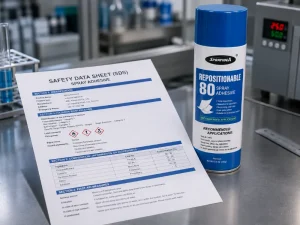
In simple words, an SDS is a guideline for all the safety risks of spray adhesive and how to cope with them. Basically, spray adhesives are made with several types of chemicals. When you spray the adhesive, some of those chemicals can come into contact with your eyes and skin. As a result, they can cause irritation and breathing problems. Some chemicals are even flammable and can catch fire quickly.
An SDS helps users understand these risks before they start working with the adhesive. It also tells them what precautions to take and what steps to follow if an accident happens. For manufacturers, an SDS matters as they are responsible for giving correct safety information. The document helps users, distributors, and emergency teams learn how to handle the adhesive safely. That’s why it must be kept up to date.
What Information Is Included in an SDS for Spray Adhesives?
Now you have a basic idea about an SDS for spray adhesive. Right? Next, when you look at an SDS, you will find information covering almost every important safety aspect. That information might feel confusing at first. To make things easier for you, here I will discuss what that safety information is and what it means.
1- Identification & Hazard Identification
The first part of an SDS is identification. It tells you what the spray adhesive is and what risks it may have. The Identification section gives basic product details. Those include name, code, recommended use, and the manufacturer’s or supplier’s contact information. It also includes an emergency contact number so you can contact them quickly in case of an emergency. The Hazard Identification section then explains what could go wrong when the spray adhesive is used or handled. For example, a adhésif en aérosol pour tissu might be flammable or cause eye or skin irritation. This section also includes warning words, hazard statements, precautions, and safety symbols. This way, users can quickly understand the main risks before they start working with the adhesive.
2- Composition / Information on Ingredients
This section explains what the spray adhesive is made of. A spray adhesive is usually a mixture of several substances, not just one chemical. It may contain a bonding resin, solvent, propellant, or other ingredients. Now, an SDS lists its chemical names, identifiers, and concentration ranges when required. But why does it matter? Because the ingredients are closely connected to the way an adhesive behaves. Some are flammable, and some are irritants. When users know their nature, they can manage the workplace properly, such as by using ventilation. However, manufacturers should ensure the information comes directly from the spray adhesive’s formula. Two adhesives that look and work the same can still have different ingredients and different hazards.
3- First-Aid Measures & Fire-Fighting Measures
Accidents can still happen even when a spray adhesive is used carefully. The First-Aid Measures section tells users what to do if the product gets into the eyes, touches the skin, is swallowed, or is breathed in. These instructions vary depending on the specific ingredients in the adhesive. Suppose someone breathes in a large amount of spray. The section will ask them to move to fresh air. This way, the Fire-Fighting Measures section applies to spray adhesives containing flammable additives. It explains which type of fire-extinguishing material should be used and what dangers may arise. The SDS also provides firefighters with information on PPE and hazardous gases that will be produced when the product burns.
4- Accidental Release Measures & Handling and Storage
Sometimes spray adhesive leaks, spills, or is released accidentally. This can happen if a container is damaged, a valve has a problem, or the adhesive is handled the wrong way. The Accidental Release Measures section guides users through such issues. It tells users what to do in such a situation. It explains how to keep people away from the spill area and stop nearby sources of heat or flames. At the same time, this section explains which protective equipment to use when cleaning up the spill. Similarly, the Handling and Storage section deals with the normal use of the spray adhesive. It helps users understand how to handle spray adhesive and where to store it when it is not in use.
5- Exposure Controls / Personal Protection

Spraying an adhesive is different from simply spreading glue with a brush. The adhesive releases a fine spray, and some of it remains in the air for a while. Ce is why controlling exposure is important. This exposure controls section of the SDS provides information on ways to reduce exposure and protect people in that area. Ventilation is one of the main points to consider. Fresh air helps prevent vapors from building up around the worker. This section mainly includes gloves to protect the hands, safety glasses to protect the eyes, and protective clothing.
6- Physical and Chemical Properties
This part of the SDS is about what the spray adhesive is like and how it behaves. It describes its color, smell, physical form, density, boiling point, and flash point. These details might seem small and technical but matter a lot. For example, the flash point gives an idea of how easily the adhesive catches fire. The product’s physical state, smell, and appearance help users identify it. Other details, such as vapor pressure, indicate how readily certain chemicals in the adhesive enter the air. So, this section takes a closer look at the adhesive’s properties.
7- Stability and Reactivity
Now there is a stability and reactivity section in the SDS que tells you how the spray adhesive is expected to behave under normal conditions. It also tells what situations can cause problems. Basically, the chemicals in the spray adhesive do not react in the same way when surroundings change. So it mentions things such as heat, flames, pressure, ou avoiding contact with certain materials. For example, a spray adhesive remains stable when it is stored correctly. However, it becomes more dangerous when exposed to high temperatures. Some ingredients also react with certain chemicals, producing unwanted effects. This section mentions substances that should not come into contact with the adhesive.
8- Toxicological Information & Ecological Information
Today, when people use a spray adhesive, their main concern is not only how well it bonds. Instead, they now also care about how it will affect people and the environment. To describe this effect, the toxicological information section of the SDS comes in. It looks at the possible health effects of the spray adhesive. It explains what happens if someone breathes in the spray, gets it on their skin or eyes, or accidentally swallows it. Likewise, the Ecological Information part looks beyond the person using the adhesive. It considers what happens if the spray adhesive or its ingredients enter the environment.
9- Disposal Considerations & Transport Information
What happens to a spray adhesive after it is no longer needed is also part of product safety. The Disposal Considerations section gives guidance on getting rid of les leftover adhesive and son can. You should not think that an empty spray can will always be thrown away like normal waste. Leftover adhesive, chemical residue, or pressure inside an aerosol can can create several problems. So this SDS section guides you on what disposal method to follow, based on the waste rules that apply in the user’s location. The spray adhesive journey before it reaches the customer also matters. The Transport Information section provides details on moving spray adhesive from one place to another. Some spray adhesives, such as aerosol types or those with flammable content, need special care when stored or transported. For this, the SDS gives information such as the UN number, proper shipping name, and transport hazard class.
10- Regulatory Information
Spray adhesive does not follow the same rules everywhere. The Regulatory Information section points toward the health and environmental rules that apply to adhesives. These rules cover areas such as chemical hazards, labeling, storage, use, or other requirements. This information becomes very crucial when a manufacturer sells the same spray adhesive in other countries. A spray adhesive that meets the requirements of one market will need additional checks before it is sold somewhere else. Different regions use different chemical classification systems. That’s why they have their own requirements for SDSs, labels, ingredients, or other safety information.
What Should Manufacturers Check Before Preparing an SDS?
Before preparing an SDS for spray adhesives, manufacturers should check several items. They should fully understand the spray adhesive they are putting on the market. The document should be based on the actual formula, not on a similar adhesive or an old SDS. Manufacturers need to check what is in the product, what risks those ingredients may create, and how the product should be handled. Here is a list of what spray adhesive manufacturers must check before they prepare an SDS.
- Product name and code
- Ingredients and concentrations
- Main product hazards
- Physical and chemical properties
- First-aid information
- Fire and spill instructions
- Handling and storage conditions
- Personal protective equipment
- Transport requirements
- Disposal information
- Applicable regulations
- Recent changes to the product or formula
SDS vs. Product Label: What Is the Difference?
There is no doubt that an SDS and a product label both give safety information. However, they do it in different ways. The label is the information you see directly on the spray adhesive container. It provides quick warnings about flammability, safe use, and potential hazards. An SDS, on the other hand, gives much more detail about the same spray adhesive.
This includes its ingredients, health risks, first-aid steps, storage, fire response, and disposal. But how and when should you use labels and an SDS? It’s very simple. A label is there when you are holding the spray adhesive, so you can quickly see the main warnings before using it. You can use an SDS when you need a deeper answer. For example, if you want to know what protective equipment to use or what to do after a large spill, the SDS will provide information.
Conclusion
A spray adhesive is a useful option for bonding different materials. However, it also contains some hazardous chemicals that must be handled properly. To help you with this, an SDS is used. It is a detailed document that brings the key safety information together in one place. It tells users about its possible dangers, safe handling, storage, first aid, fire safety, and disposal. For manufacturers, making a good SDS is very important. The information should be based on the real spray adhesive and its ingredients. It should also match the label and follow the rules of the country where the product will be sold. If the spray adhesive or its safety information changes, the SDS should be checked and updated.