
Spray adhesive is one of the most useful options for bonding several parts together. It bonds items such as foam, fabric, paper, plastic, wood, and metal. However, a good spray adhesive creates a strong bond, dries at the right speed, and performs well in harsh conditions. Have you ever wondered how manufacturers ensure all these qualities? The answer lies in SGS testing for spray adhesives. SGS laboratories test the properties of an adhesive to see how it performs against specific requirements. If you are new to this term, it may feel technical. But worry not! In this guide, I will discuss what SGS testing is, how to perform it, and what tests it includes. So let’s get started.
What Is SGS Testing for Spray Adhesives & Why Is It Important?
SGS testing for spray adhesives means checking a spray adhesive in a laboratory to see how well it works. This testing helps manufacturers determine whether their products meet specific requirements. The SGS testing looks at different factors, such as bonding strength, drying time, chemical content, VOCs, and safety.
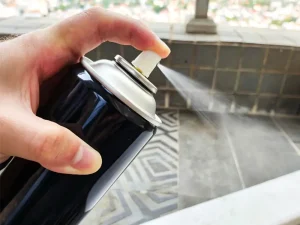
Remember, there is no single test in SGS that every type of spray adhesive must go through. A series of tests is selected and performed based on the adhesive type and its intended use. The target country also matters. Different markets have different rules for chemicals, safety, labeling, and emissions. For spray adhesive suppliers, SGS testing means a lot. It gives them a clear idea of how their spray adhesive will perform in real use.
For example, an adhesive might stick well at normal room temperature. However, when you use it in heat, it might lose its strength. That’s why SGS testing helps companies reveal problems before the product reaches customers. It also helps manufacturers compare production batches and maintain consistent quality throughout.
What Tests Are Included in SGS Testing for Spray Adhesives?
Now you have basic know-how about what SGS testing is and why it matters. Right? As I said above, SGS is not a single test; instead, it includes several tests, each of which ensures different qualities of the spray adhesive. Let’s discuss what tests are included in SGS testing for spray adhesives.
1- Adhesion / Bond Strength Test
The first major test in SGS is an adhesion test that assesses how strongly a spray adhesive bonds two materials. During the test, the adhesive is applied between selected materials. It is then allowed to bond under controlled conditions. The bonded pieces are then pulled, peeled, or moved apart using a testing machine. If it takes much force to pull the bonded part apart, it means the bond is strong, and vice versa. Once the results are obtained, the testing team compares different adhesive formulas. They test one formula against another to see which one creates a stronger bond.
2- Tack Test
Tack is basically the initial stickiness of an adhesive spray. It tells suppliers what happens just after the spray adhesive is applied and two surfaces are brought together. Unlike a bond strength test, this test is not concerned with the bond’s final strength. Instead, it looks at how quickly the adhesive will grab and hold the surface in the early stage. For example, you spray adhesive on a piece of foam and place fabric over it. If the fabric immediately holds its position, the adhesive has a good initial tack. So the tack test ensures good grabbing of the spray adhesive.
3- Drying or Setting Time
When you apply the adhesive spray, it needs some time to be ready to work properly. Right? So that’s the drying or setting time, which shows how long the process takes. The drying test is all about knowing the setting time of a spray adhesive. This setting time matters a lot during actual production. Suppose the adhesive spray dries too slowly. In this case, you have to wait longer before moving your product to the next step. That will slow down the whole process. On the other hand, if it sets too quickly, you will not have enough time to make any adjustments.
4- VOC Testing
When a spray adhesive is used, some of its ingredients evaporate into the surrounding air. These substances include volatile organic compounds, commonly called VOCs. VOCs are chemicals that easily become gases and mix with the air. These chemicals can be harmful to human health. So, companies must be sure of the amount in their products. The reason is that regulations allow only a limited amount of these VOCs. During the test, a spray adhesive sample is placed inside the controlled-condition chamber. When it releases VOCs into the air, the team collects gas and air samples for analysis to measure VOC levels. The final results are compared with the specific limit or requirement that applies to the product.
5- Chemical / Restricted Substance Testing
No doubt, an adhesive contains a mixture of chemicals. However, that does not mean every chemical is acceptable in every market. There are some substances that are limited or banned because they create risks for people or the environment. Chemical or restricted-substance testing looks for such substances controlled by regulations. For this test, a laboratory takes a sample of the adhesive spray. It uses specialized testing equipment to detect the chemicals that need to be checked. The laboratory first identifies what substances are present and then measures their amounts. The results help them see whether their adhesive spray meets the required chemical limits.
6- Flammability Test
Some spray adhesives contain flammable ingredients. That’s where fire safety becomes very crucial. A flammability test checks how easily the adhesive or its vapors catch fire. It also checks how the spray adhesive will behave after ignition. So basically, the test gives manufacturers an idea of fire risk during use, storage, and handling of spray adhesives. The test is performed under controlled conditions. The results ensure that the spray adhesive is safe to use and meets fire safety standards.
7- Heat Resistance Test
A spray adhesive sometimes works perfectly at normal room temperature. However, it might become weak when the surroundings get hot. That’s why heat-resistance tests come into play. They ensure whether the adhesive will keep its bond when exposed to higher temperatures. To perform the test, the adhesive is first used to join the materials. The bonded sample is then placed in a high-temperature chamber. The heat begins to act on the adhesive, eventually melting or softening it. After that, the laboratory examines the bond and checks for changes in strength or physical condition.
8- Cold / Low-Temperature Testing
Not only high heat but also cold can compromise the strength of spray adhesive. It might become less flexible, brittle, and start cracking when placed in cold environments. That’s why manufacturers use cold testing to ensure their spray adhesive will perform well in the cold. For the test, the adhesive is applied to the materials it is meant to bond. Then, the sample is allowed to form its bond. It is then placed in a controlled cold environment for a certain time. After that, the sample is checked either while it is still cold or after it has returned to normal temperature. They check for signs of cracking, which are evidence that the spray is not meant for cold.
9- Humidity & Water Resistance Testing
Moisture and humidity are the worst things for spray adhesives. They create issues for the adhesive bond, especially when the finished product is placed in a humid place. So laboratories use humidity and water resistance testing to check how well the adhesive will work under wet conditions. For the test, a bonded sample is kept in a high-humidity chamber. The laboratory then checks what happened to the bond’s strength. Did it stay firm? Did the adhesive soften? If yes, it means there is a need for improvement in its formula.
10- Odor Testing
A spray adhesive has a noticeable smell due to the solvents and other ingredients in son formulation. This smell can be very disturbing, especially when the adhesive is used in an enclosed space. So, odor testing determines the smell produced by the adhesive. It helps to know whether the odor stays within the level expected for its intended use. This test is carried out in laboratories using special instruments. These machines test the specific odor and consider factors such as the smell’s strength and how noticeable it is after use.
What is the SGS Testing Process for Spray Adhesives: Step-by-Step Guide
SGS testing for spray adhesive sounds like a complicated process when you d'abord en entendre parler. However, its basics are quite easy to understand. Before any testing starts, the manufacturer juste needs to follow these simple steps.
Step 1: Define the Spray Adhesive
The very first step is to clearly explain what the spray adhesive actually is and its formula. The manufacturer provides basic product information, such as the adhesive type and its use. This information is useful for laboratories. Why? Because a adhésif en aérosol pour tissu will have different testing needs than one made for automotive parts.
Step 2: Identify the Required Standards
Once the spray adhesive is defined, the next question is what requirements it needs to meet. Remember, il y a no single set of tests que fits every type of spray adhesive. The requirements change with the adhesive’s purpose, the country where it will be sold, and industry rules. So at this stage, the company identifies the relevant standards, regulations, or buyer requirements. For example, one customer mainly cares about bond strength. At the same time, other customers demand chemical, VOC, or flammability testing. So, manufacturers determine the required standards based on this priority level.
Step 3: Prepare the Adhesive Spray Sample
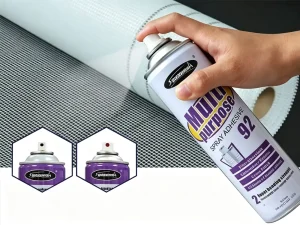
After the testing requirements are clear, the manufacturer has to provide the right samples. These samples should represent the same product that will actually be sold or used, not an old one. However, the number and type of samples will depend on the tests being performed. For an aerosol spray adhesive, the laboratory will need the complete product in its normal container. With the samples, they must also provide data on the batch, specifications, and relevant documents.
Step 4: Laboratory Testing
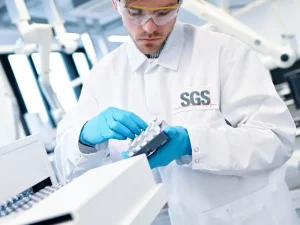
Now the actual testing begins. The laboratory prepares and tests the samples according to the selected test methods. Depending on the testing plan, these tests can include bond strength, tack, drying time, VOCs, heat resistance, cold resistance, moisture, and so on. The laboratory uses controlled test conditions. After that, it takes measurements to produce results that will be compared with the required specifications.
Step 5: Record the Test Results & Report
Now it comes to the last step, where the laboratory records the findings and prepares a test report. The report typically identifies the product or sample tested, the test methods used, and the results obtained. But this report gives manufacturers more useful information than a statement such as “the adhesive passed.” It provides test information that can be reviewed against the specific requirements. Suppliers use the results for quality control, product development, and customer communication.
En bref : If a result does not meet the required level, that does not mean the whole product is useless. It shows that a particular part of the formulation or spray adhesive design needs attention. The manufacturer then investigates the problem, makes changes, and conducts testing as needed.
SGS Testing vs. SGS Certification: Are They the Same Thing?
No! SGS testing and certification are not the same thing. Testing means a product is checked using certain methods to find out how it performs. It ensures that spray adhesive meets specific requirements. For a spray adhesive, this means checking bond strength, VOC content, flammability, drying time, and more. The laboratory then gives the test results based on the sample that was tested. On the flip side, certification is a broader process.
It means a product, process, or system has been formally assessed against defined requirements. It means the spray adhesive has received certification when the required conditions are met. In other words, a test report mainly tells you what was found during testing. However, certification provides formal recognition under a particular certification scheme. So, having an SGS test report does not automatically mean that a spray adhesive is “SGS certified.”
Conclusion
SGS testing is one of the most effective ways to check the reliability of spray adhesive. It includes a series of tests such as bond adhesion, odor, low- and high-temperature testing, and more. This testing helps manufacturers know these important points before the spray reaches the market. But the most important thing is not to test every possible property just because a test is available. The better approach is to identify how the adhesive will be used, where it will be sold, and what conditions it will face. From there, you can approach the right testing program. That also makes the results more useful and helps manufacturers avoid problems later.