
Carbon fibers have become a must-have in modern industries. From car parts to airplanes and even small repair parts, this material is valued everywhere. The main reason for this popularity is the perfect combination of lightweight and high strength. But one thing that often confuses beginners is how carbon fiber is actually joined, bonded, or fixed. Unlike normal materials like metal and wood, you cannot screw or bolt it. These methods will highly affect its strength. That’s where adhesives come into the scene. But not all adhesives can work for carbon fiber. To help you choose the right one, I will explore some of the best adhesives for carbon fiber in this guide. You will know their specifications, uses, and specialties. So let’s get started.
Why Use Adhesives for Carbon Fiber?

No doubt carbon fiber is a very strong material. It can withstand every type of stress and daily wear effectively. However, it is very sensitive when it comes to drilling or fastening. If you use screws, bolts, or rivets, they will create small pressure points that slowly weaken the material. Over time, these points lead to damage and cracks, especially when the carbon fiber part is under vibration.
That’s why manufacturers prefer different types of special adhesives. These adhesives cover a larger area between the two pieces. Now the force is spread more evenly across the joint and does not concentrate at one spot. As a result, carbon fiber can maintain its structural integrity, and there is no risk of cracks.
Moreover, carbon fiber is generally used in applications where lightweight is a major concern. For example, carbon fiber is used in various aircraft parts and in fast cars. If you use fasteners and bolts, they will add to its weight, and it will not remain that effective. But adhesives are naturally lightweight, which cannot affect the carbon fiber’s lightweight nature.
Best Adhesive Options for Carbon Fiber
Now you have a basic idea of why the adhesive is the best option for carbon fiber. Right? Now you might be confused about which one works truly well for it. Actually, you will find several adhesive options on the market. Still, not all of them will be handy for bonding carbon fiber. To help you choose the suitable option, here I will discuss some of the best adhesives for carbon fiber and their specialties.
1- Epoxy Adhesives
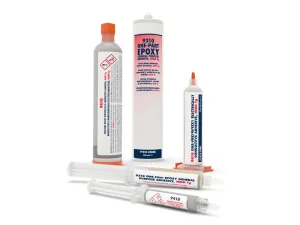
The very first adhesive suitable for carbon fiber bonding is epoxy adhesive. Many professionals consider it the best choice for carbon fiber bonding. It is because of its excellent strength and durability. Many carbon fiber products are made using epoxy-based resins during the manufacturing process.
Because of this, epoxy adhesives become naturally compatible with carbon fiber surfaces. When you apply it in the right way, the epoxy adhesive will create a strong bond that will handle heavy loads, impacts, and long-term use. Moreover, the epoxy adhesives come in two parts.
The first one is resin and the second is hardener. When you mix them before applying, a chemical reaction takes place. That reaction gradually turns the liquid adhesive into a strong, almost permanent bond. Due to this strength, the epoxy adhesive takes hours to a full day to dry.
2- Polyurethane Adhesives
Polyurethane adhesives are another popular option for bonding carbon fiber. These adhesives might not be as strong as epoxy ones. However, they still offer the best combination of strength and flexibility. This flexibility is what makes it special. Basically, some materials, when bonded with carbon fiber, expand, contract, or slightly move. A very rigid adhesive may struggle in these situations. But polyurethane can flex with the movement without easily cracking.
As a result, the bond remains intact over time. Besides this, Polyurethane adhesives also resist moisture and weather conditions well. So you can use it even for outdoor applications. These adhesives are not just limited to bonding carbon fiber with carbon fiber. Instead, you can use it to join carbon fiber with plastics, metals, wood, and composite materials. However, for maximum structural strength, polyurethane might not be the best choice.
3- Acrylic Adhesives
Now, it comes to acrylic adhesives that are used for carbon fiber when speed is as important as strength. Many facilities and workshops cannot afford to wait many hours for an adhesive to cure fully. In such cases, acrylic adhesives are a handy option because they dry very quickly. This helps reduce production time and allows projects to finish quickly. Moreover, acrylic adhesives are also more forgiving when it comes to surface preparation. With all other adhesives, you have to be very careful.
Even a small amount of contamination can highly reduce bonding performance. But acrylic adhesive still gives strong bonds even when the surface is not that well prepared. With all these, this type of adhesive also offers strength and toughness. Strength helps hold materials together. At the same time, toughness proves handy in absorbing the shocks and impacts. As a result, acrylic adhesives are used in automotive panels and industrial assemblies.
4- Cyanoacrylate Adhesives (Super Glue)
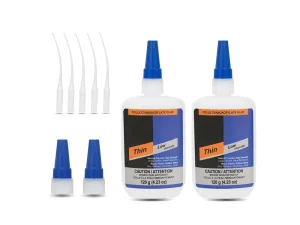
Cyanoacrylate adhesives, better known as super glue, are probably the most familiar adhesives to most of you. They are famous for their ability to bond materials within seconds. This makes them one of the quickest adhesive solutions available. Generally, epoxy or acrylic adhesives require mixing or longer curing times. However, cyanoacrylate adhesives are usually ready to use straight from the bottle.
A small amount will quickly form a bond between two surfaces (carbon fiber and any other surface). However, the speed of super glue is also why it is not preferred for heavy-duty carbon fiber bonding. Why? The bond it forms is generally more brittle than those of other adhesive types. That brittle bond often cracks under heavy stress. So it is better to use it for carbon fiber that will not be used in critical parts.
5- Vinyl Spray Adhesive
Vinyl spray adhesive is another adhesive option not primarily meant for a strong bond. Instead, it is used to attach vinyl wraps, decorative films, or foam materials to carbon fiber. Often, the carbon fiber project requires additional wrapping for decorative or safety purposes. In that case, heavy-duty spray adhesives for carbon fiber might not fit. That’s why manufacturers use vinyl spray adhesives. They are easy to apply even if you are a beginner.
You just need to spray a small amount from a distance directly on the carbon fiber surface. After that, you can attach the wrap or whatever you want in a few minutes. This is because it has a very fast curing time and dries in a few minutes. However, these adhesives are not suitable for permanently bonding carbon fiber parts. They cannot withstand heavy loads, strong impacts, or continuous stress.
6- Vacuum Infusion Spray Adhesive
Vacuum infusion spray adhesive differs from all other carbon fiber adhesives. Why? The reason is that its main purpose is not to permanently bond carbon fiber parts. Instead, it is used during the manufacturing process of carbon fiber components. As you know, the carbon fiber parts are built from several layers of fabric. Before resin is added, these layers must stay exactly where they are placed. If layers are misplaced, it’s not good for carbon fibers. Even a small shift will highly affect the final shape, appearance, or strength of the part. That’s where vacuum spray adhesive comes in handy.
7- Silicone Adhesives
Lastly, there are silicone adhesives for carbon fiber. Adhesives such as epoxy and acrylic are mainly chosen for their strength. Right? But silicone adhesives are valued for their flexibility. Their primary purpose is not to create the strongest bond possible. Instead, they are meant to maintain a reliable connection even when the bonded parts are in constant vibration. All that becomes possible due to the flexibility that absorbs all types of stress and shocks.
Another area where silicone adhesives stand out is environmental resistance. Sunlight, rain, humidity, and temperature changes can gradually weaken bonds. However, silicone adhesive can withstand all those harsh outdoor conditions very well. Besides this bonding, these adhesives for carbon fiber also provide sealing against dust and water. It completely stops water, moisture, or dust from entering into joints. This dual functionality makes it even more useful. But when it comes to achieving the ultimate bond strength with carbon fiber, a silicone adhesive might not be ideal.
Factors to Consider When Choosing an Adhesive for Carbon Fiber
Now you can see that there is not a single adhesive option for carbon fiber. You will find a variety of adhesives that work well for the carbon fiber. But it does not mean that all those will fit your project’s needs. If you choose the wrong adhesive, you will end up wasting time and materials. That’s why, to help you choose the right adhesive for carbon fiber, here are some factors you must consider.
-
Bond Strength:
The first thing you must look at is bond strength. The adhesive you choose must be strong enough to hold the carbon fiber parts together during normal use. However, strength is not just about how much weight an adhesive can support. Instead, you should also pay heed to how well the bond handles pulling, pushing, twisting, and repeated stress over time. For most critical carbon fiber uses, always prioritize adhesives that offer very strong bonds, such as epoxy and acrylic.
-
Material Compatibility:
Carbon fiber is not always bonded to another carbon fiber part. In many projects, you need to join it with materials such as aluminum, steel, plastic, fiberglass, or wood. So always check the nature of the material you are bonding along with carbon fiber. After that, choose an adhesive compatible with that material.
-
Environmental Conditions:
A bonded joint does not always exist in a perfect environment forever. It can be used in heat, cold, moisture, sunlight, and other changing weather conditions. If your carbon fiber part is exposed to such conditions, you must choose an adhesive that can withstand all this. For outdoor use, acrylic, silicone, and polyurethane are the best options.
-
Cure Time:
Every adhesive type I discussed above has a different curing time. It is the time an adhesive takes to make an ultimately strong bond. So you should choose the adhesive according to your project timeline. If you are doing repair work, the adhesive with a fast curing time will be a good option. However, sometimes you need to make adjustments after applying and need durability. In that case, the adhesive with a slow curing time is a suitable option.
Conclusion
Carbon fiber is a highly useful material used in almost every industry. It is known for its lightweight and strength. However, when it comes to joining or bonding the carbon fiber parts, many get confused. The reason is that they cannot be joined using fasteners and bolts. That’s where the adhesives become a favored choice.
But not all types of adhesive are suitable for this purpose. There are special adhesives that are well-suited to the nature of carbon fiber. In this guide, I have discussed all those adhesive options with their specifications. Each of those has a different curing time, bond strength, and use case. You can choose the one that perfectly matches your project’s needs.