
Embroidery work is all about precision. The precision of the patterns, design, and every stitch depends on the fabric’s stability. For this, manufacturers generally use spray adhesives to hold the fabric in place. However, embroidery spray adhesives are not always problem-free. Sometimes the needle becomes sticky, stains appear on the fabric, or the material shifts during stitching. But the good thing is that these problems are not unavoidable or unresolvable. If you know the causes of such problems, you can handle them easily. That’s why, for your ease, in this guide, I will discuss some Embroidery Spray Adhesive Problems and their fixes. So let’s get started.
Embroidery Spray Adhesive Problems, Causes & Solutions
No doubt embroidery spray adhesives are made to make the embroidery process much easier. However, things do not always go as planned. Several problems can occur due to the use of this adhesive spray, which can cause frustration for beginners. To better understand them, let’s look at some common embroidery spray adhesive problems you can face and their solutions.
1- Needle Gumming

The first most common problem with embroidery spray adhesive is needle gumming. In this problem, the adhesive sticks to the needle, which might hinder or even stop it from stitching. Basically, during embroidery, the needle moves thousands of times, picking up small amounts of adhesive each time.
Over time, this residue buildup and leads to a problem known as needle gumming. This issue generally occurs when too much spray adhesive is used. Some of this heavy layer remains on the fabric and ultimately sticks to the needle. Low-quality adhesives and stitching before the adhesive dries can also enhance needle gumming.
Solution: You can resolve this issue easily. First, stop the stitching machine and inspect the needle. If you notice adhesive residue, carefully clean the needle using a soft cloth and rubbing alcohol. However, if the buildup is very heavy, it is best to replace the needle. Also, always try to use less adhesive and let it dry before embroidery work.
2- Fabric Stains
The second problem you can face when using embroidery adhesive is fabric stains. Often, the adhesives used to create embroidered patches do not form a permanent bond. But sometimes, after stitching, they leave marks on the fabric surface. These marks appear as dark spots, oily patches, sticky areas, or even slight discoloration around the embroidery design.
These stains appear more prominently on the light-colored fabrics. The main reason for this issue is the excessive use of spray adhesive. When you spray more than needed, it will soak into the fibers rather than stay on the surface. Spraying too close to the material can make this problem even worse. Why? Because it will concentrate a large amount of adhesive in one area.
Solution: If you notice adhesive stains, it is best to act quickly. Check the fabric care instructions and gently wash the adhesive. You can also use fabric cleaner if the stains are light. But before using these products, always test them on a small piece. The best way to avoid this issue is to follow the manufacturer’s recommended spraying distance.
3- Fabric shifting During Embroidery
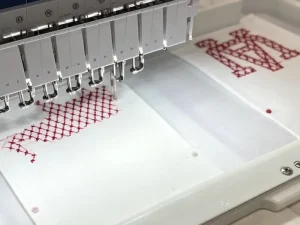
Sometimes the fabric shifts out of position while the machine is stitching. This is known as fabric shifting. As I said above, spray adhesive is mainly used to stabilize the fabric in its place during the embroidery process. But it starts shifting, which can highly affect the accuracy of the embroidery design.
There are several reasons why fabric shifting occurs. The major one is using too little adhesive, which creates a weak bond that cannot hold the fabric. Also, the fabric itself is very stretchy, slippery, or lightweight, and it will naturally shift out of its place. Large and dense embroidery designs can also place extra stress on the fabric, increasing the risk of movement.
Solution: When you notice the fabric shifting, stop the machine and check whether it is still attached to the stabilizer. If not, remove it and place it back in the correct position. Secondly, use enough spray adhesive to stabilize the fabric. Also, if your fabric is slippery, use the right strong adhesive spray suited to its nature.
4- Thread Breaking
Thread breaking is another major problem that happens when using embroidery spray adhesive. Here, the embroidery thread snaps during the stitching. As a result, embroidery quality is affected, and production speed may slow. Several reasons can cause thread breaking.
The first one is when too much spray adhesive is applied to the fabric. As the needle passes through the sticky area, adhesive can collect on the needle. Now, when the thread passes through the eye of the needle, it can no longer move. It faces friction and eventually breaks.
Solution: When a thread breaks, first check the needle. If you notice any sticky residue, clean the needle or replace it with a new one. Also, inspect the thread path to ensure the thread moves freely and there is no resistance along its path. Also, always try to apply a small amount of adhesive near the stitch area to prevent the thread from breaking at the start.
5- Excessive Adhesive Residue After Embroidery
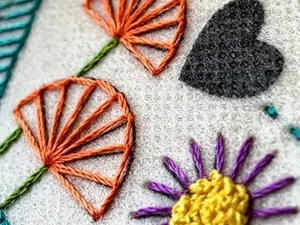
Sometimes you notice that spray adhesive remains behind after the embroidery work is finished. A small amount of residue is normal in some cases. However, excessive residue can cause unnecessary issues and increase your cleaning workload. This problem occurs when too much adhesive spray is applied.
Remember, the job of this embroidery spray adhesive is to hold the fabric, not to form a permanent bond. If you spray too much, the fabric and stabilizer cannot absorb or use it all. The extra adhesive has nowhere to go, so it remains on nearby surfaces. Over time, this leftover adhesive collects lint, dust, and thread fibers, which affects its quality.
Solution: The solution for this issue is to remove the residue before it has a chance to accumulate. After you have finished your embroidery work, inspect the hoop, needle area, and nearby machine surfaces. If you notice stickiness, wipe the area with a soft cloth and a suitable cleaning solution. Remember that light spray is often better than excessive spray. This light spray is usually enough to hold the fabric and stabilizer together.
6- Hoop Contamination
An embroidery hoop is a circular or rectangular frame that basically holds the fabric tightly during embroidery. It consists of two parts, with fabric placed between them to prevent shifting. But often, when adhesive is sprayed onto the stabilizer or fabric, some of it may accidentally land on the hoop as well. At first, the amount is very small, and you ignore it.
But over time, this buildup can lead to permanent contamination, which can affect the stitch quality. A contaminated hoop can create several problems. For example, the sticky residue can sometimes transfer onto the fabric and leave marks. The main cause of this issue is adhesive overspray. Due to too much adhesive, some of it spreads beyond the target area and sticks to the embroidery hoop.
Solution: The easiest way to cope with this issue is to clean the hoop regularly. Even if you spray the adhesive carefully, some still transfers to the hoop. So when you finish your work and clean it immediately, there will be no chance of residue buildup. Also, do not use excessive spray adhesive and try to avoid contact with the hoop.
Best Practices for Using Embroidery Spray Adhesive To Avoid Problems
Most embroidery spray adhesive problems do not happen because the product is faulty. Instead, they usually result from mistakes in their applications. You can avoid these problems from the start to achieve cleaner stitches and better fabric stability. For this, here are some best practices to help prevent issues with embroidery spray adhesive.
- Choose the Right Adhesive: Not all spray adhesives are made for embroidery. Some general-purpose adhesives are designed for crafts and paper only. They will leave excessive residue and damage fabric. That’s why you should always choose the fabric spray adhesive that matches your fabric’s nature.
- Apply Light Coats: A common mistake newbies make is using too much adhesive. You might think that a thick layer will hold the fabric firmly. However, that’s a wrong conception. A light coat is always enough to hold the fabric well. Too much will make the needle sticky and contaminate the hoop.
- Allow Proper Drying Time: Often, you place the fabric on the stabilizer immediately after spraying the adhesive. However, this will create stickiness and enhance the residue buildup issues. So take your time and wait for a few minutes to make sure that the adhesive is completely dry. After that, start stitching the embroidery.
- Replace Needles Frequently: Even with the right amount of adhesive, the needle can still wear out. This worn-out needle will affect stitch quality, and the needle may even fail to move. So when you see the wear sign, immediately replace the needle.
- Store Adhesives Properly: The proper storage of spray adhesive is equally important. If you place it in extreme heat, direct sunlight, or excessive moisture, its consistency can change. As a result, it might not dry properly or form bonds, which can cause problems later. So always follow the manufacturer’s storage recommendations and preserve it in the right place.
Frequently Asked Questions
- Does embroidery spray adhesive gum up needles?
Yes, it can. This usually happens when you use too much adhesive. That extra layer sticks to the needle, which might cause it to stop moving or even break the thread.
- Can embroidery spray adhesive stain fabric?
Yes, some adhesives can leave stains if they are applied heavily or used on delicate fabrics. To avoid it, always test the adhesive on a scrap of fabric first. Also, use the thin coating of spray adhesive.
- How do I stop fabric from shifting during machine embroidery?
To stop fabric from shifting during machine embroidery, use the correct stabilizer and apply a light coat of spray adhesive. Also, make sure the fabric is hooped securely.
- Is temporary spray adhesive washable?
Most of the spray adhesives are meant for temporary bonds. That’s why they can be easily removed by washing with water. However, it is always best to check the manufacturer’s instructions for the specific product.
- What spray adhesive is best for embroidery factories?
A high-quality embroidery-specific spray adhesive is best for an embroidery factory. It must have low residue and strong temporary hold. All of this will not cause issues such as fabric stains, hoop contamination, or thread breakage.
Conclusion
The spray adhesive is a must-have in the embroidery process. They hold the fabric in place and prevent it from shifting, allowing the stitch to be high quality. However, no matter how conscious you are, problems can still arise when using the adhesives. For example, sometimes, there is needle gumming, fabric shifting, and thread breaking.
But the good news is that all these problems can be resolved with a few steps. First, identify the cause of each problem, then handle it accordingly. In this guide, I have discussed some of those major issues and their solutions. By knowing them, you can achieve high-quality embroidery work without delays and frustration.