
What are some of the best glue options for cardboard? This is the first question that comes to your mind when you start working with cardboard. Actually, cardboard is one of the most common materials you often find in crafts, DIY projects, and even packaging. It is widely used due to its lightweight and affordability. But when it comes to sticking some pieces of cardboard, the right glue matters a lot.
If you use the wrong glue, your project may fall apart, become messy, or even get damaged. This can increase the cost of your project and make you feel frustrated. But if you are new to glue options for cardboard, worry not! In this guide, I will explore some of the best glues that you can use for sticking cardboard. So let’s get started.
Some Best Glue Options for Cardboard
In the market, you will find several types of glue. But that does not mean that all those glues work well with cardboard. There are some specialised glues that are compatible with the delicate nature of cardboard. To make research easier for you, I will discuss some of the best glues for safely and effectively sticking cardboard.
1- White Glue (PVA Glue)

The first, most common glue you can use for cardboard is white glue, which you may also know as school glue. It has been used for centuries because it is easy to handle, affordable, and safe for everyday use. As you know, cardboard is made of paper, so strong glue can damage it. But white glue is specifically formulated to bond with paper-based materials. When you apply it, the glue slowly soaks into the cardboard.
As it dries, it creates a strong bond by holding the fibers together. But remember, it is very important to use the right amount. Why? Because white glue is slightly watery. If you apply too much, it can make the cardboard soft, wrinkled, or bent. To avoid this mess, always use a thin and even layer. After that, spread it evenly so that there are no dry spots and the glue dries evenly.
2- Hot Glue
Another glue you can use for cardboard is hot glue, especially when you need a quick, strong bond. Hot glue is a type of glue you use with a glue gun. Inside the glue gun, there is a solid glue stick. When the gun heats up, this stick melts and turns into liquid glue. Now, when you press the glue gun, the melted glue comes out. But the best thing is that as soon as it touches the cardboard, it starts to cool and harden again very quickly.
Unlike white glue, you don’t have to wait a long time for it to dry. That’s why it is the perfect choice when you are working on emergency projects. Moreover, hot glue does not soak into the cardboard as liquid glues do. Instead, it sits on the surface and acts like a thick adhesive layer. As a result, there is no chance the cardboard will become soft or wrinkled. But while using hot glue, you must be very careful. As you can see, the glue gun becomes very hot. So the melted glue can burn your skin if you touch it.
3- Super Glue (Cyanoacrylate)
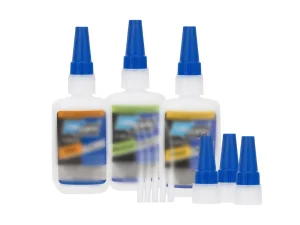
Super glue is a very strong and fast-drying adhesive for cardboard. Its chemical name is cyanoacrylate, but most people call it super glue. The name comes from its ability to form tight bonds within just a few seconds. That’s why you can use it for quick fixes and small repairs. The best thing about super glue is that it works best on small areas of cardboard. When you apply even a tiny drop, it spreads slightly and quickly sticks to the surfaces.
After you apply, it dries so fast that you don’t need to hold the pieces for long. However, super glue is not ideal for large cardboard surfaces. Why? Because, as I said above, it dries so quickly, you don’t get enough time to adjust the pieces. Also, it can make the cardboard hard and slightly brittle after drying. That’s why I don’t suggest it for projects that need flexibility.
4- Spray Adhesive
Spray adhesive is one of the most advanced types of glue today for cardboard. How? Actually, it is a specialized glue that comes in a can. You have to apply it by spraying it onto the surface. There is no need to squeeze glue from a bottle. You simply press the nozzle, and a thin layer of glue spreads evenly across your cardboard surface. Moreover, you might notice that with regular glues, you have to put a lot of effort into applying a thin, even layer.
But spray adhesive creates a light and uniform layer. This helps avoid lumps, lines, or messy glue marks. Also, it does not soak into the cardboard too much because it is sprayed as a mist. So you don’t have to worry about your cardboard getting wrinkled or becoming soft. But remember, spray adhesive is not the strongest glue. It may not hold heavy or thick cardboard pieces very well.
5- Wood Glue
From its name, you might think that wood glue is made for wood. Yes, you are right. It is mainly used to join wood pieces. However, now it is also widely used for cardboard. Why? Because both wood and cardboard have the same fiber nature. Cardboard is actually made from wood pulp. So the wood glue works equally well on cardboard. The main benefits of wood glue are its strong bonding power. Actually, unlike white glue, wood glue is usually thicker.
When you apply it to cardboard, it slightly penetrates the surface and hardens as it dries. This creates a solid and long-lasting connection between the pieces. Also, unlike regular glues, it works well for thick cardboard. However, wood glue takes time to dry properly. After applying it, press the pieces together and keep them in place for a while. For drying, you can use alternative methods such as gentle heat or UV light.
6- Glue Sticks
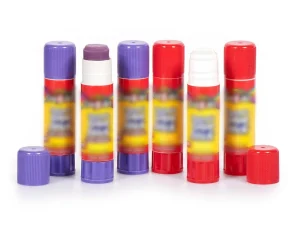
The most affordable, easiest to use, and easiest to handle glue option for cardboard is a glue stick, which is widely available. They basically come in a solid stick form and are usually used in a small tube holder. You need to twist the base, apply the glue directly onto the surface, and press the pieces together, and that’s it. There is no liquid, no dripping, and no strong smell.
So it’s much safer, even for your children, to use. But keep in mind that glue sticks work best for light cardboard projects. Why? Because the glue does not go deep into the cardboard fibers. It stays on the upper layer. That’s why it’s likely to weaken under pressure or heat. So you have to be very careful after its application.
How to Choose the Best Glue for Your Cardboard Project?
There are several glue options for cardboard. But the question is, which one is truly best for your project? That can be very confusing if you are a beginner. But worry not! Here are some factors to consider before choosing glue for cardboard.
- Type of Your Cardboard Project: First of all, know what type of project you are working on. For example, if you are working on light projects like crafts or posters, glues like glue sticks or white glue are enough. However, if your project involves making something that requires strength, such as a storage box or a 3D model, you will need to use wood glue.
- Strength of the Bond You Need: As you know, not every cardboard project requires the same level of strength. Sometimes you need only temporary strength and want your cardboard to stay in place for a short time. For such a case, white glue and glue sticks are best. However, if you need the pieces to stay fixed even after pressure or movement, choose wood glue.
- Drying Time of Glue: In the specifications for all glues, you can see that each glue has a different drying time. This time can affect your project deadlines. So if you are in a hurry, hot glue or super glue is better because they dry in seconds. But if you have time and want to adjust your work slowly, white glue is a better choice.
- Surface Area: The size of your project also matters a lot when choosing glue. How? Actually, not all glues can handle a large surface area. So for large cardboard sheets, spray adhesive or white glue will work better. They can cover wide areas evenly. For small joints or tiny parts, you can go with super glue or hot glue.
Frequently Asked Questions (FAQs)
Can I use regular glue on cardboard?
Yes, you can use regular white glue (PVA glue) on cardboard. It works well for light and medium projects. Just avoid using too much so the cardboard does not become soft.
What glue dries the fastest?
Interestingly, super glue and hot glue dry the fastest. They can stick cardboard within seconds. That’s why they are perfect options for quick fixes and small projects.
Does glue damage cardboard?
It mainly depends on the type and amount of glue you are using. If you apply too much liquid glue, it can make the cardboard weak or wrinkly. As a result, the entire cardboard can get damaged. Also, if you use the wrong glue (which is not made for paper), the cardboard will get damaged.
What if I use the glue incorrectly on cardboard?
If you use glue the wrong way on cardboard, you need not worry. Special glue removers are available that quickly remove the glue before it dries. They are designed for certain types of glue, so you must be careful while choosing.
Conclusion
Cardboard is an effective and affordable source for several projects. It is used in DIY projects, packaging, and even shipping boxes. But when it comes to sticking the cardboard, many of you might think that all types of glue can work equally well. But that’s a misconception. Actually, cardboard is delicate.
So you have to be careful in choosing the right glue for your project. To make things easier for you, I have discussed some of the best glue types for cardboard in this guide. Each of these glues has different specifications, like drying time and application process. So remember, there is no single “perfect” glue for everything. The best glue is the one that matches your project’s needs.