
Joining and assembling different parts is very common in various modern industries. For this purpose, manufacturers use different types of adhesive. But remember, not all those adhesives perform the same in the real world. Among those, web spray adhesives have become a very popular choice today. But if you are new, you might wonder: What is web spray adhesive, and where is it actually used?
Knowing this is very crucial, especially if you are working with a large area or products. The efficient performance and easy application of web spray make it stand out. But if you are new to this adhesive, you might feel confused about it. However, worry not! In this guide, I will explain what web spray is, its uses, and when you should choose it over other options. So let’s get started.
What Is Web Spray Adhesive?
Web spray adhesive is a type of glue that is sprayed onto a surface in a web-like pattern. Instead of coming out as mist, it comes in the form of thin strands that just look like a spider web. This pattern is what makes a strong bond and reduces adhesive waste.
This easy application makes the web spray effective for covering large areas. But how does it actually work? Basically, when you spray the web adhesive, it comes out from the nozzle and forms a web pattern. This pattern helps it spread evenly across the surface. Now, there are also some solvents and carriers in the adhesive that start to evaporate quickly after you apply it.
As they evaporate, they leave behind a sticky adhesive layer. When you press the surfaces together, this adhesive layer forms a tight bond between them. As time passes, the bond becomes stronger and more stable. However, the final strength of the bond will depend on the type of web spray adhesive you are using.
Components of Web Spray Adhesive
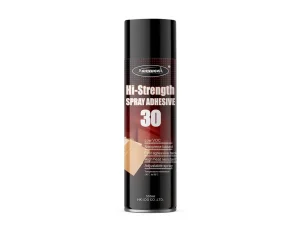
Just like regular spray adhesives, web spray adhesive might also look like a simple glue. But in reality, it contains some important ingredients that work together to form a strong bond. Each of them has a specific job to ensure a reliable bond. So let’s dive in and explore some of its main components.
- Adhesive Polymers: It is the first critical part that is responsible for actual bonding. Polymers are special materials that become sticky and hold two surfaces together. When you spray the adhesive, these polymers remain on the surface, forming a sticky layer.
- Solvents or Carriers: These ingredients keep the adhesive in a liquid form inside the container. Their main job is to carry the adhesive polymers from the spray can or spray gun. Once the spray is on the surface, these carriers evaporate.
- Propellants: Propellants are mainly found in aerosol web spray adhesives. They don’t create the bond but push the adhesive out of the container. These propellants are also responsible for creating the web-like pattern.
- Additives: These are extra ingredients that spray adhesive manufacturers add to the web spray. Why? Because they improve adhesive performance. Some improve heat resistance, some flexibility, and drying time. Remember, these additives are added in very small amounts.
Some Common Types of Web Spray Adhesives
Now you know about the basics and components of the web spray adhesive. Right? Now you must know that not all of them are the same. Instead, they come in various types to fit different job requirements. Let’s find out the common types of web spray adhesives and their specifications so that you can choose the right one.
1- Permanent Web Spray Adhesive
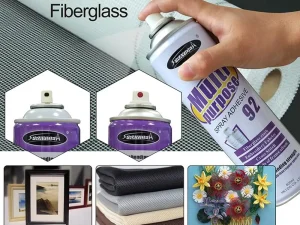
As the name suggests, permanent web spray adhesives form an unbreakable bond. They are meant to last longer, and you cannot remove them without damaging the surface. That’s why, before applying it, you should be very careful with the surface’s positioning. These adhesives are the best choice for furniture making and insulation installation.
2- Repositionable Web Spray Adhesive
This type of web spray adhesive is made for situations where materials may need to be moved or adjusted before they are permanently fixed. Actually, sometimes, you make mistakes while positioning the material. So this is a repositionable web spray that allows you to adjust things. It does not form a permanent bond quickly. Instead, it provides a temporary hold, allowing them to make adjustments. This flexibility is the reason it is used in fabrics, templates, graphics, and paper products.
3- High-Temperature Web Spray Adhesive
High-temperature web spray adhesive is another type that is formulated to perform in high heat where others fail. Generally, excessive heat weakens and softens the adhesive bond. As a result, it starts peeling off. But in the case of high-temperature web spray, they contain special additives that resist high heat effectively. They ensure the material remains bonded even when exposed to heat. Therefore, you can use it for industrial equipment and insulation systems.
4- Pressure-Sensitive Web Spray Adhesive
Lastly, it comes to a pressure-sensitive web spray that quickly makes bonds when you press the surface. There is no need for a long drying time or waiting, as they are pressure-sensitive. After applying spray adhesive, you just need to press the surfaces together, and the spray will form a bond at that time. Generally, this bond can be permanent or temporary depending on the type. You can use this web spray adhesive for labels, laminates, protective films, and display materials.
Use Cases of Web Spray Adhesives
As I said above, web spray adhesives are known for their ease of use and ability to cover large surfaces. That’s why they have become a necessity in several modern industries. For better understanding, let’s discuss the main areas where this web spray actually stands out.
1- Furniture Manufacturing
The first major user of our spray adhesive is in furniture manufacturing. In this industry, manufacturers often need to attach foam, fabric, and padding to wooden or metal frames. Using screws or nails for these materials is not a very safe option. That’s why they prefer web spray adhesive as a safe and efficient solution. It helps create a strong bond without adding extra weight.
2- Automotive Industry
Today, modern vehicles contain many materials that need to be bonded together inside the cabin. These parts usually include carpets, roof liners, insulation materials, and door panels. To bond them, web spray adhesive is a very reliable option. Why? Because it can form flexible bonds. Vehicle interiors experience vibration, movement, and temperature changes every day. Web spray withstands all these conditions effectively.
3- Mattress Production
As you know, a mattress is made up of several layers of foam. These layers are very large, and if not properly bonded, the mattress will tear apart after a few uses. But web spray can effectively cover large layers, which is why it is used in mattress production. It spreads across large surfaces, making them soft and comfortable.
4- Textile Industry
The textile industry is all about handling fabrics, upholstery materials, and laminated textiles. In many cases, fabrics need to be temporarily or permanently attached to other materials during production. So this is web fabric spray adhesive that ensures all types of binding. Also, it sprays evenly, so there is no risk of wrinkling or shrinking in fabrics.
5- Packaging Industry
You will agree with me that in the packaging industry, speed is of utmost importance. There, workers have to pack a large number of products every day. To cope with all this, manufacturers use web spray adhesives. Why? Because they’re easier and faster to apply. It quickly bonds cardboard, paper materials, protective inserts, and display components.
6- Construction & Insulation Projects
Construction projects often deal with insulation boards and foam panels. Those panes need to be attached to large surfaces. Regular adhesives fail to handle such large surfaces. Therefore, spray adhesives prove handy there. Workers can spray the web adhesive onto a wall or insulation panel and quickly press the materials together. This helps keep the insulation in place during installation and reduces the need for mechanical fasteners.
Benefits of Web Spray Adhesive
As you can see, there is a wide range of uses of web spray adhesives in several industries. The reason for its wide usability lies in its fast, easy application process. But that’s not all. Let’s explore more about what actually makes this web spray adhesive stand out.
1- Fast Production Speed
First of all, web spray adhesive has the ability to speed up production. Generally, you can see that Traditional adhesives often need brushing, rolling, or manual spreading. All this takes a lot of time and effort. But web spray adhesive can be applied in seconds. This allows you to cover large areas in less time. This is effective for industries that produce thousands of products daily and need to meet tight deadlines.
2- Uniform Coverage
Another main benefit of web spray adhesive is that it provides even and consistent coverage. Usually, if the adhesive is applied unevenly, some areas are too wet while some remain dry. This causes peeling or wrinkling. But the web-like spray pattern helps distribute the adhesive across the surface. This creates a more consistent bond throughout the material.
3- Lower Material Waste & Versatility
Web spray adhesive also helps reduce material waste. How? Actually, the adhesive is directed exactly where it is needed. Traditional spraying methods create excessive overspray, leading to waste. But web spray has a web-like pattern that improves control and reduces unnecessary adhesive loss. Also, it is very versatile, meaning it is not limited to bonding a single type of material. Instead, it can bind foam, fabric, paper, cardboard, insulation, and some plastics. This versatility allows manufacturers to use a single adhesive solution for multiple applications.
4- Strong & Reliable Bonds
A good adhesive should not only stick materials together but also keep them bonded during regular use. Right? This is the exact quality of the web spray adhesive. It creates strong bonds that can withstand movement, handling, and everyday wear. Also, once it dries, it holds the things tightly together. Some of its formulations even remain flexible after curing to prevent cracking.
5- Easy Application & Clean Operation
Web spray adhesive is also valued for its ease of use. You do not need special tools such as brushes or rollers to spread the adhesive. Instead, you can spray the web spray onto the surface to join the materials. In addition, the web spray pattern creates a cleaner working environment. There is no risk of material waste or spread elsewhere, so your entire workspace remains clean.
When Should You Choose Web Spray Adhesive?
The ultimate usage of the web spray adhesive depends on your project’s needs.
You should choose web spray adhesive when you need to bond large surfaces quickly, evenly, and efficiently. It is more useful when binding materials such as foam, fabric, insulation, paper, and lightweight panels. If speed, consistent coverage, and strong bonding are your priorities, web spray adhesive is a good choice.
As I mentioned above, web spray adhesives are known for their fast application. So when traditional application methods are too slow or difficult, it is a good time to use web spray. For example, suppose you are working on a large surface. Spreading glue with a brush or roller on large surfaces can take time and may not provide even coverage.
But web spray adhesive quickly creates a thin, uniform layer that helps materials bond more consistently. Also, you should choose it when you want to reduce material waste and keep the work area cleaner. Its web-like spray pattern gives better control and helps direct the adhesive where it is needed. So whether you are working on construction, packaging, furniture production, or even a DIY project, web spray adhesive can be a good choice.
Conclusion
Web spray adhesive has become a favored glue choice for many projects. It is made with polymers that come out of the can in the form of a web pattern. This pattern is what makes it easier to apply without risk of material waste. However, these web spray adhesives are not all the same; they come in many types.
Some of them are permanent, some are repositionable, while some resist heat. All this versatility allows you to choose the best one for your needs. The flexibility, uniform coverage, fast production, and easy application have made it more popular. You can use it for furniture production, packing, mattresses, and even insulation.