
As you can see, paper is used in many creative activities. For example, you can find it in DIY projects, scrapbooks, and assignments. But working with paper is not much easier. A slight mistake while gluing it can ruin your entire project. That’s where a different spray adhesive has come into play. But not all spray adhesives are the same; they vary in bond strength and usability. That’s why it’s very normal to get confused about choosing the right one if you are new to spray adhesives. If so, worry not! This guide to choosing the best spray adhesive for paper projects will help you. I will discuss factors you should consider when choosing a spray adhesive. So let’s get started.
Why Is Spray Adhesive Best for Paper Projects?

As you know, the regular glue used in the past was not ideal. It causes many problems, such as bubbles, wrinkles, uneven bonding, and more. However, things have changed with spray adhesive; it poses as many problems as regular glue does. In the section below, I will discuss some key reasons why spray adhesive is very popular for several paper projects.
- Even Coverage: One main reason for spray adhesive’s popularity is its even coverage. Generally, with regular glues, some areas may get too much glue, while other areas may get very little. But spray adhesive comes out as a fine mist, covering the surface more smoothly.
- Works Faster & Easier: Another reason many people prefer spray adhesive is speed. Traditional glue often takes more time. You have to squeeze it out and then spread it properly. But spray adhesive covers a wide area within seconds. You simply shake the can, spray the surface, and attach the paper, and that’s all.
- Offers a Cleaner Finish: You might notice that many paper projects are ruined due to visible glue marks and sticky edges. Right? But with spray adhesive, there is no such problem. It creates a cleaner finish because the glue layer is usually very thin. Also, it does not leave large glue blobs or heavy wet spots on the paper.
- Best for Thin Paper Types: As you know, thin paper is very delicate and difficult to work with. When too much liquid glue is applied to this thin paper, the paper absorbs moisture quickly. But spray adhesive uses less moisture than regular glue. The fine mist creates a lighter adhesive layer that does not damage the thin paper.
How to Choose the Best Spray Adhesive for Paper Projects?
Now you know why spray adhesive is loved for paper projects. Right? But remember, not all spray adhesives are equal in terms of quality, features, and bonding. So if you choose the one that doesn’t match your project needs, the results will be a waste of time and money. To avoid all these hassles, consider these factors before choosing a spray adhesive.
1- Type of Paper & Thickness
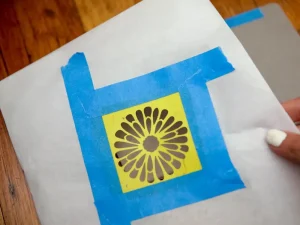
One of the first things you should consider before choosing a spray adhesive is the type of paper you are using. Many beginners think every paper reacts the same way to glue, but that is not true. Remember, every paper has its own unique properties, such as softness and thickness. So one adhesive may work perfectly on one paper but create problems on another. So if you are using thin paper, you should be extra careful. Why? Because it absorbs moisture very quickly.
In such cases, you should choose a light spray adhesive. On the other hand, if you are working with thick materials, you should go for a stronger spray adhesive. If you use a weak adhesive on thick paper, the paper will slowly lift or even separate after some time. You should also pay attention to the paper surface. When your paper has an uneven surface, use a stronger spray adhesive; otherwise, use a weaker one.
2- Permanent or Temporary Uses
Secondly, decide how long you want the paper to stay attached when choosing a spray adhesive. Sometimes, when you are working on something like a photo album, wall display, poster, or paper decoration, you want to keep it for a long time. For such projects, choose a permanent spray adhesive, such as craft spray adhesive.
It will create such a strong bond that holds the paper firmly in place for a long time. Even if you want to remove it later, it will be very difficult. On the flip side, sometimes you just want to adjust paper pieces while designing. In these situations, you should consider a temporary or repositionable spray adhesive. This will allow you to lift, move, and reposition the paper easily without the risk of tearing it.
3- Drying & Setting Time
Another factor you must consider is the drying and setting time of the spray adhesive. It is the time it takes for a spray adhesive to form a bond, finally. Some spray adhesives dry quickly, while some remain wet for some time. If you are working on a project and already know the exact placement of your paper, a fast-drying adhesive will work well. Why?
The reason is that it will save you time, especially when you are in a hurry. However, if you are new to paper crafting or working on detailed designs, you should find slower-drying adhesives. This slower-setting time gives you extra time to move and adjust the paper before it permanently sticks.
Quick Highlight: Many beginners think that drying and setting time are the same. But that’s wrong. Drying time means how quickly the adhesive surface becomes less wet or sticky. Setting time refers to how long it takes for the adhesive to create its full bonding strength. So remember, even if the paper feels dry after a few minutes, the adhesive still needs time to set and secure fully.
4- Indoor or Outdoor Usability
Whether you use paper indoors or outdoors also affects your choice of spray adhesives. How? Suppose your project will stay indoors, such as in a room. Such environments are stable, meaning there is no heavy rain, sunlight, or extreme temperature changes. So, for such a case, you should not need extra protection.
So you can use standard spray adhesives that hold the paper well. On the other hand, if your project will be used outdoors, you need to be more careful. Outdoor conditions can be harsh for paper. For example, the sun and rain can weaken the glue. Thus, you should choose a weather-resistant spray adhesive that can withstand weather changes.
5- Acid-Free Formula & Paper Safety
Another thing you should keep in mind when choosing the spray adhesive is whether it is acid-free and safe for paper. Acid-free spray adhesive means it does not contain harmful acids that slowly damage paper over time. If an adhesive is not acid-free, it will ultimately cause the paper to turn yellow and become weak.
So if your paper project is long-term and important, always use an acid-free spray adhesive. Such a spray adhesive will secure your paper for a long time without the risk of damage or discoloration. Generally, when buying spray adhesive, look for an acid-free label. Additionally, you should consider other safety features, not just acid-free labeling. For example, for indoor use, you should choose an adhesive designed for low odor.
6- Spray Control & Application Smoothness
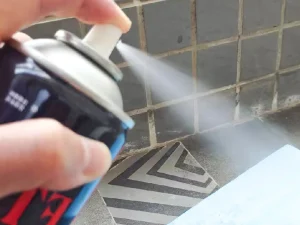
When choosing a spray adhesive, also consider how much control you have over it when spraying. Basically, some spray adhesives come out too unevenly. Instead of a soft mist, they spray in the form of heavy drops. When this happens, there is a high chance that glue gathers in one spot. That extra glue can soak into the paper, causing wrinkles and bubbles.
That’s why you must always choose the spray adhesive that comes out like a fine mist, almost like a light fog. This fine spray will spread evenly across the surface, so every part of the paper gets a similar amount of adhesive. Besides this, make sure you choose a spray adhesive that lets you control where the spray goes. If the spray is too wide, the glue will spill beyond the paper area, creating a mess around your work.
7- Repositioning Flexibility
Repositioning flexibility means how easily you can move the paper after you have already placed it. But how does this flexibility affect the choice of a spray adhesive? Actually, sometimes you place a piece of paper, and then you realize it is a little tilted or not in the right spot. Now, if the spray adhesive is too strong, the paper sticks immediately, and you cannot fix it.
Even if you try to pull it, the paper will be damaged. So if you are a beginner, especially consider repositioning the flexibility of spray adhesive. Choose the Craft Spray Adhesive that stays light for a short time after spraying. During this time, the paper does not fully lock into place. You can lift it, move it, and set it again in a better position.
Frequently Asked Questions
Is expensive spray adhesive always better?
No, an expensive spray adhesive is not always better. A higher price does not mean better results. Some expensive spray adhesives offer extra features like stronger bonding or a cleaner spray. But there are still some budget-friendly spray adhesivesthat work very well.
How can you remove spray adhesive from paper?
Removal of the spray adhesive depends on its nature and type. If the spray adhesive is still wet, you may gently peel it off or adjust the paper. However, for dried permanent spray adhesives, you have to use special adhesive removers.
What are the Signs of a High-Quality Spray Adhesive?
A good spray adhesive usually sprays in a fine and even mist, not in drops or splashes. It spreads smoothly and provides a strong yet clean bond. A quality spray adhesive also does not cause wrinkling.
Conclusion
Spray adhesive has become a favored glue choice for many paper projects. The reason lies in its fine mist, smooth application process, and strong bonding. But not all types of spray adhesive are the same. They have varying drying times, bonding times, and usability. That’s why, as a beginner, you can make mistakes by choosing the wrong one for your projects.
Therefore, in this guide, I have discussed some factors you must consider before buying spray adhesive. Remember, a good spray adhesive will make your paperwork easier, faster, and more professional. It will also help prevent problems like wrinkles, bubbles, and uneven adhesion.