
For most HVAC systems, efficiency issues do not start with the equipment. They actually begin with the ductwork.
Unless the ducts are properly insulated, your HVAC system may not work as expected. Even a high-performance heating or cooling system can fall short of your expectations. The air can cool down, warm up, or leak out before it reaches the room it is supposed to condition.
That is why duct insulation is critical. It is crucial not only for your HVAC system’s performance but also for its longevity. Duct insulation is also about your long-term operation costs. Proper insulation for ductwork helps reduce energy loss. It also protects the system from unnecessary strain.
This comprehensive guide provides answers to all your questions about duct insulation. Here you will learn how duct insulation works and the types of duct insulation. You will also learn what solution is suited to your HVAC application. Hopefully, this article will give you some clarity.

Why Duct Insulation Is Important
HVAC systems carry conditioned air through metal ducts. These ducts usually pass through unconditioned spaces. Ducts that pass through attics, mechanical rooms, basements, or roofs withstand temperature extremes. In these cases, exterior ducts prevent heat loss and energy waste.
If the air ducts are not insulated, heat transfer happens more quickly. In winter, warm air loses heat. In summer, cool air gains heat. To compensate for this, the HVAC unit must run longer and consume more energy. It can also shorten the system’s lifespan.
So, the primary function of HVAC duct insulation is to stabilize air temperature. It can significantly reduce condensation — a major cause of corrosion and mold growth. You want to get optimal performance from your HVAC system. Now insulate your ductwork and see what happens.
How Does Duct Insulation Work?
Duct insulation basically serves as a barrier. It maintains a difference in temperature between the air inside and outside the duct. If you are new to insulating ductwork, see our guide on how to insulate ductwork for a better understanding. A key reason many systems lose efficiency is improper insulation. Understanding the proper method can make a difference.
Materials like fiberglass can trap air within their structure, reducing heat transfer.
A properly installed duct with insulation can maintain temperature throughout the HVAC system, ensuring the insulation ductwork performs efficiently from start to finish. This consistency in temperature can significantly reduce energy waste. Learning how to insulate ductwork plays a key role in achieving these benefits.
Fiberglass Duct Insulation: The Industry Standard
When people discuss duct insulation, they usually refer to fiberglass duct insulation. It is the most widely used material in the HVAC industry.
Fiberglass insulation is popular, particularly because it offers good thermal performance. This material is also popular due to its sound absorption, easy availability, and affordability. It works across a wide temperature range. It is a standard choice for both commercial and residential environments.
Fiberglass not only reduces heat transfer. It also reduces noise caused by mechanical vibration and airflow.
Depending on the design, fiberglass can be installed internally or externally. Most commonly, they are installed externally. The applications usually rely on wrap-style installation methods.
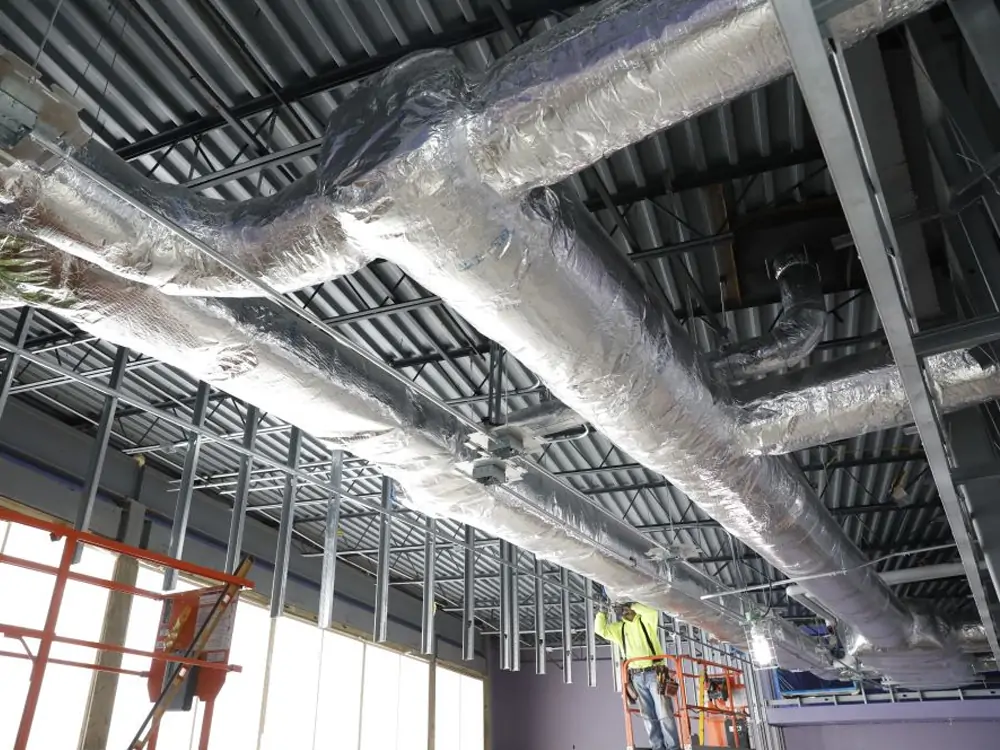
Fiberglass Duct Wrap and External Insulation Systems
Fiberglass duct wrap is used to wrap the exterior of ductwork. It usually comes in rolls and is wrapped around metal ducts. This way, it serves as a thermal barrier. Most wraps come with a facing that acts as a vapor retarder. It prevents condensation from forming on the duct surface.
This type of duct is used in functional duct systems that still require insulation. Examples include HVAC systems in mechanical rooms, basements, and rooftops.
If duct wrap insulation is installed correctly, it provides good thermal performance. Proper insulation can also significantly extend the system’s lifespan.
Duct Board Insulation: Duct and Insulation in One System
Duct board insulation combines structure and insulation in a single product. Duct boards are made from rigid fiberglass panels and fabricated into rectangular ducts. They serve both as an air pathway and the insulating layer.
Besides providing reliable thermal resistance, fiberglass absorbs noise effectively. That is why this material is used in commercial buildings where sound control is crucial. The duct itself is composed of an insulating layer, so it does not need a separate wrap installation.
That said, make sure the duct boards are sealed. Inadequate or poor sealing can lead to air leakage. And air leakage means reduced efficiency.
Lined Ductwork
Lined ductwork refers to a solution where insulation is installed inside the duct. The internal liners are made mostly of fiberglass materials. They come with a protective coating that resists corrosion from airflow.
For large HVAC systems where noise reduction is a priority, it is often the best choice.
Internal insulation can effectively block noise. However, the installation must be correct and precise. Otherwise, it cannot avoid restricting airflow and compromising indoor air quality.
Understanding Duct Wrap Systems and Terminology
The terms duct wrap, duct insulation wrap, and air duct insulation wrap are interchangeable. They refer to external insulation systems designed to reduce heat transfer.
These systems work for both new construction and retrofit projects. Note that the durability of a system largely depends on its installation quality.
Gaps, poor adhesion, and loose sections can allow moisture intrusion. And it significantly reduces the thermal effectiveness of the system.
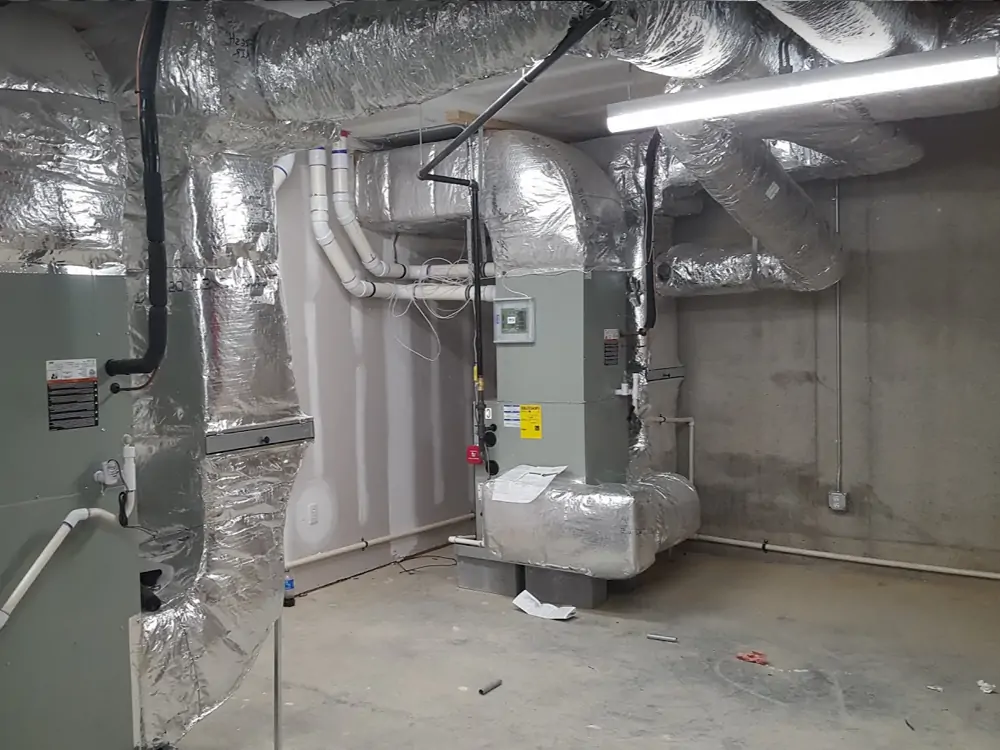
Choosing the Best Insulation for Ductwork
There is simply no single best insulation wrap for ductwork. Make a choice depending on the factors that matter. Consider operating temperatures, indoor vs outdoor placement, and exposure to moisture. Also, check the local code requirements.
HVAC systems installed outside are exposed to the elements. Sun, rain, wind, and temperature swings can degrade insulation over time. In exterior systems, insulation wraps are installed with protective jacketing and high-performance adhesives. These keep the materials securely bonded to the duct.
Sagging, separation, and air gaps reduce the effectiveness of insulation. When installing insulation, be careful and avoid these issues.
AC Duct Insulation: Residential and Commercial Applications
AC duct insulation is applied differently in residential and commercial settings. Ease of application and cost efficiency are the priorities in residential applications. Fiberglass-based solutions are more suited to residential applications.
Commercial systems utilize a mix of several insulation methods. They can include lined ductwork, duct board insulation, and external wraps.
External duct systems require more durable solutions. The focus should also be on resisting environmental exposure and mechanical stress.
The Role of Adhesives in Ductwork Insulation
Regardless of the insulation you’re using, success depends on the quality of installation. Adhesives play a crucial role in ductwork insulation. Proper use of adhesives ensures consistent contact between insulation and duct surfaces.
Professionals often use spray adhesives to bond insulation wraps to metal ducts. Spray adhesives are easy to use and provide uniform coverage. Proper insulation is crucial to resist vibration and airflow pressure. Insulation also reduces environmental stress and improves the long-term reliability of the system.
Duct Insulation and Building Codes: What You Cannot Ignore
Duct insulation does more than improve your comfort and reduce your bills. In many cases, building codes even require duct insulation. They aim to reduce energy waste and prevent HVAC systems from working too hard.
The insulation levels required by the codes depend on where the ducts are installed. Ducts inside living or working areas require less insulation. Ducts in unconditioned spaces, such as attics, basements, and garages, require more insulation. That makes sense. Outdoor ducts are exposed to heat, cold, wind, rain, and direct sunlight.
If duct insulation does not meet building codes, inspections can fail. And that can lead to higher costs and additional rework. You can avoid such issues by installing code-compliant insulation.
Frequently Asked Questions about HVAC Duct Insulation
What insulation is used for HVAC ductwork?
Fiberglass is the most widely used insulation material in the HVAC industry. It comes in two forms: duct wrap and duct liner. Besides fiberglass, some other materials are used for this purpose. They include mineral foam, polyethylene foam, and elastomeric foam.
What’s better, R6 or R8 insulation?
R8 insulation is preferable in most cases. It offers greater thermal performance and energy efficiency. R6 insulation is about 1.5 inches thick, whereas R8 is typically 2 to 2.5 inches thick. However, R8 may not always be the most practical choice because it is 20-40% more expensive than R6.
What is a common mistake in ductwork installation?
One common mistake is failing to seal joints and seams. If there are leaks, they allow conditioned air to escape into unconditioned space. It results in loss of energy and reduced indoor air quality.
What happens if AC lines are not insulated?
Uninsulated AC lines withstand winter weather, UV radiation, and constant condensation. Being exposed to the elements, they absorb ambient heat from the surrounding environment. It forces the air conditioner to work much harder. As a result, the system consumes more energy.
Final Thoughts
Duct insulation is not something to ignore. It is directly responsible for the efficiency and durability of your HVAC system. Consider the environment and system design when choosing the right insulation material.
I hope you now have a better understanding of different types of duct insulation. You can now make an informed decision about insulating your ductwork.