
Spray adhesive is a must-have in several projects. You often use it in your DIY projects, fabric work, and repairing tasks for sticking things together. Sometimes this adhesive spray sticks to your hands by accident during work, which is very annoying. That’s why you probably wonder: How to get spray adhesive off hands effectively?
It is very important to know this, as sticky adhesive spray can feel uncomfortable and even stop you from working. It can also cause skin irritation if left on the skin for too long. Are you facing the same problem and don’t know how to get rid of it? Worry not! In this guide, I will discuss a few easy, effective methods to remove adhesive spray from your hands. So let’s get started.
Why Is Spray Adhesive Hard to Remove?

There are several reasons why the spray adhesive is difficult to remove. Before you start removing it, first know those reasons. Actually, the main purpose of spray adhesive is to hold things together by forming strong bonds. So, whether it is fabric, a patch, or your skin, the adhesive will form a strong bond that won’t come off easily.
Secondly, spray adhesive does not just settle on the top of your skin. Instead, it forms bonds and slightly soaks into your skin’s pores. This further complicates the removal of the adhesive. The third and most important reason is that spray adhesive is not water-friendly. It is nonpolar, and water cannot break it down, even after several washes.
How to Get Spray Adhesive Off Hands?: Some Best Methods
Undoubtedly, it is very difficult to get spray adhesive off your hands, and you know why. However, it is not impossible. Here, I will share some of the best and most effective methods you can try on your own to remove it.
Method 1: Soap & Warm Water
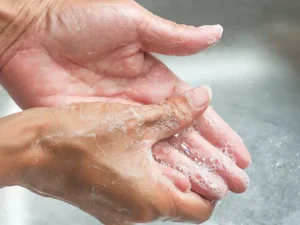
This is the first and easiest method you should always try. Actually, when the adhesive spray first touches your hands, it stays wet. It means it hasn’t bonded with your skin yet. Thus, at this stage, you can quickly remove it using warm water and soap. For this method, first pour warm, not hot, water on your hand.
Remember, too, that hot water will quickly make the adhesive spray stick to your hands more strongly. After pouring warm water, apply a generous amount of regular soap to your hands and gently rub it in. You can also use a soft cloth to rub the soap into the surface. Now rinse again with warm water and check for stickiness. If it still feels sticky on your hands, repeat the process.
Method 2: Use Cooking Oil
You used soap and warm water, but the adhesive is still on your hand? The second way to remove it is to use cooking oil. Cooking oil basically loosens and breaks down the adhesive spray’s sticky bond, making it easier to wipe away. To apply this method, take a small amount of cooking oil, whichever you have in your kitchen.
Apply it directly to the sticky areas on your hands. Now gently rub and massage the oil into your skin for a few minutes. When rubbing, you will notice the adhesive softening and coming off slowly. With this, take a tissue and wipe the loose glue. Once you feel there is no stickiness left, rinse your hands with warm water and soap.
Method 3: Rubbing Alcohol
When oil and warm water fail to remove adhesive spray from your hand, alcohol is the next best option. It is one of the fastest and easiest ways. Actually, alcohol first breaks down the sticky layer, so it loses its grip on your skin. So first, take a small amount of rubbing alcohol and put it on a cotton ball or soft cloth. Now gently rub the alcohol-dipped cotton on the sticky area of your hands.
However, don’t rub aggressively but slowly in circles for a few minutes. You will see the adhesive loosen and start to come off. Once you are sure that the stickiness is gone, wash your hands with soap and water. After that, you must apply a small amount of moisturizer. Why? Alcohol can dry your hands and irritate your skin.
Method 4: Hand Sanitizer
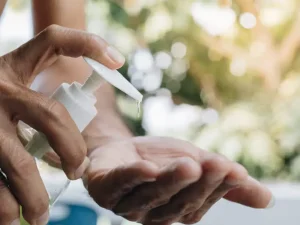
Using hand sanitizer is another effective and easy way to get spray adhesive off your hands. How? Actually, hand sanitizer contains a significant amount of alcohol. These alcohols are very effective at breaking the adhesive’s sticky bond. So if you don’t have pure alcohol at home, you can use sanitizer as an alternative.
The application method is the same as alcohol. For example, take a small amount of sanitizer and either put it on the cotton or apply it directly to your hand. Now start rubbing gently for a few minutes. After that, rinse with soap and water to remove any leftover sanitizer and stickiness.
Method 5: Use Baby Oil or Petroleum Jelly
Are you a skin-sensitive person? If so, petroleum jelly or baby oil is most effective for removing spray adhesive from your hands. These are skin-friendly, soft, and totally harmless products. Actually, baby oil or petroleum jelly contains fats that penetrate the adhesive’s sticky layer. It instantly breaks the chemical grip of the spray without harming your skin.
So take a few drops of baby oil and apply it directly onto your hand. Start massaging it slowly into your skin, covering all parts where the adhesive has stuck. However, if stickiness is still present, I recommend leaving it with baby oil for a few minutes. After that, again, rub it and rinse it with soap and water.
Method 6: Use a Mild Scrub
Sometimes, a small amount of adhesive remains on your hands even after trying oils or alcohol. Right? In that case, a mild scrub proves handy. The scrub has tiny, hard particles that gently remove adhesive residue. There are a few ready-made scrubs available in the market that you can buy. However, you can also make it at home easily.
For this, take a little sugar or baking soda and mix it with water to make a thick paste. Now apply this paste to the sticky areas of your hand, and gently rub it in with your finger. Remember, if you rub hard, the thick particles will harm your hands. For better results, leave it for a few seconds. Once you feel the adhesive is no longer there, wash your hands with soap and water.
Method 7: Nail Polish Remover
Using nail polish remover is the best method to remove the stubborn spray adhesive. However, you have to be very careful when using it. Why? Because nail polish remover contains acetone. These chemicals can quickly break down the adhesive. At the same time, they can also cause skin irritation or an allergy.
That’s why you take a small amount of nail polish remover on the cotton. After that, quickly rub this cotton on the affected areas of your hands. However, don’t leave it on your skin; it can harm it. Once you notice there is no stickiness left, rinse your hands with water. Also, apply moisturizer to prevent dryness or after effects.
Method 8: Use Specialized Spray Adhesive Removers
Beyond all the household removers, there are also specialized removers for adhesive sprays. These adhesive removers are stronger than regular soap, nail polish remover, or alcohol. They contain strong chemicals and are specifically designed for fabric-adhesive sprays. To use these removers, always read the manufacturer’s instructions.
Actually, there are some industrial removers designed for metal or wood surfaces. Such adhesive removers can highly affect your skin. Also, if you are skin-sensitive, always choose removers labeled as skin-safe or medical adhesive removers.
How to Protect Your Hands From Sticking Spray Adhesive
From the above methods, you can see that adhesive sprays can be removed from hands. However, you should always try to take precautions to prevent adhesives from sticking to your hands. How? Here are the tips.
- Wear Gloves: The best way to protect your hands is to wear gloves. These gloves will act as barriers between your skin and the adhesive, preventing it from sticking. For this purpose, always use disposable latex, nitrile, or rubber gloves.
- Apply a Protective Layer: If gloves are unavailable, you can apply a protective layer to your skin. This protective layer can be a lotion, petroleum jelly, or oil. This creates a thin barrier, making it harder for the adhesive to stick.
- Control the Spray Area: Being careful in advance is best to prevent the adhesive from sticking. For example, hold the spray can at a distance from your work surface. Also, spray in short bursts rather than a long continuous spray. Lastly, make sure your hands are not in the spray’s path.
- Wash Hands Immediately: When the adhesive spray is wet, it can be easily removed. At this time, the spray has not made a permanent bond. If you notice adhesive spray on your hands, immediately wash them with warm water. This will prevent you from trouble later.
Frequently Asked Questions
Is spray adhesive harmful to skin?
Spray adhesive is usually not harmful to the skin in small amounts. But it can cause dryness, irritation, or stickiness, which can cause more problems for skin-sensitive persons.
How long does it take to remove a spray adhesive?
The time taken to remove a spray adhesive depends on its nature. For example, it takes a few minutes to remove spray adhesive using simple methods. However, for a stronger or drier adhesive, it may take a bit longer and require repeating the process.
Can I peel off the spray adhesive?
Yes, you can gently peel off the spray adhesive if it has dried. However, do not pull too hard, as it may irritate or damage your skin. That’s why it is better to soften it first with oil or warm water before peeling.
Conclusion
It is very common for adhesive sprays to get stuck to your hand while using them. However, it is not a problem you cannot solve. I have discussed several easy methods that can help you get spray adhesive off your hands. For example, you can use alcohol, baby oil, nail polish remover, or hand sanitizer.
For stubborn adhesives, specialized removers are available as well. However, the best approach is to avoid the adhesive from sticking. For this, take precautions such as wearing gloves, applying an oil layer, and controlling the spray area. If you still face this problem, it’s normal. Apply these methods and get rid of the stickiness of spray adhesives.