Screen printing is one of the most popular methods for printing designs on products such as T-shirts, posters, and packaging. This process might look simple from the outside. However, at its core, there is a complete screen printing chemicals list working behind the scenes. These chemicals play several roles, resulting in a strong, long-lasting final print.
If you’re new to screen printing, all these chemical names can be overwhelming. But, once you know what each chemical does, the printing process gets much easier. Hence, to make things clear, this guide will discuss the most common screen printing chemicals. So, let’s get started!
Screen Printing Chemicals: A Comprehensive List
Before you start printing, remember it is not as simple as it seems. It includes several steps and chemicals to ensure proper printing. To print confidently and avoid mistakes, you first need to know the key chemicals used in screen printing. Here is the list of the main chemicals used in silk screen printing.
1- Photo Emulsion
Photo emulsion is one of the most essential chemicals in screen printing. It is a light-sensitive liquid that you apply to the mesh screen. Once it dries, it forms a smooth coating on the mesh. This coating is what becomes your stencil. A stencil is a part of the screen that allows ink to pass through only in certain areas and blocks it in others. As a result, you get your final print design.

Photo emulsion comes in two main types. The first one is Diazo emulsions, which are beginner-friendly, slower to expose, and more affordable. However, the second one is SBQ (dual-cure) emulsions. This type of photo emulsion is faster to expose and more durable, making it suitable for detailed designs. You can choose the type depending on the level of detail you need.
2- Emulsion Remover (Stencil Remover)
Emulsion remover, also called stencil remover, is another primary chemical used in silk screen printing. As the name suggests, this chemical is used to remove the old emulsion from a screen. How? After you finish printing, the photo emulsion stencil on the screen has done its job. If you want to print a new design on the same screen, you need to remove the old emulsion completely.
This is where the emulsion remover comes in. You apply the remover to both sides of the screen and let it sit for a few minutes. The chemical softens the hardened emulsion, breaking it down. When you rinse the screen, the water washes it away. After washing, the screen is clean and ready for a new emulsion coating. Emulsion removers are handy because screens are expensive. So, with an emulsion remover, you can reuse them, which saves money.
3- Degreaser
Degreaser is a chemical used to clean the screen mesh before applying emulsion. Actually, before you coat your screen, the mesh must be completely clean. Even small amounts of dust, oil, or fingerprints can stop the emulsion from sticking properly. If the emulsion doesn’t stick well, it can cause pinholes and weak stencils.
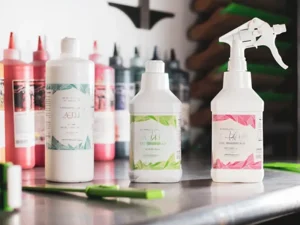
To avoid these issues, degreasers are used. Degreasers are usually mild, soapy liquids that remove dirt, oil, and other residues from the mesh. To use them, you apply the degreaser to both sides of the screen. After that, scrub the screen gently with a soft brush and rinse thoroughly with water. After cleaning, the screen should be dry and ready for emulsion.
4- Haze Remover (Ghost Image Remover)
Even after removing the old stencil with an emulsion remover, a faint shadow of the previous design may remain on the screen. This faint design shadow is called a ghost image. If the ghost image is not removed, it can affect the quality of your next print by creating blurry lines.
This is where haze remover comes in. It is a special chemical designed to remove stubborn stains from the mesh completely. You apply it to the screen, scrub lightly, and rinse with water. The haze remover dissolves the leftover emulsion that normal stencil removers cannot remove. That’s why haze removers are crucial when printing detailed or multi-color designs.
5- Ink Remover or Screen Wash
After printing, screens are often covered with leftover ink. If this ink dries on the mesh, it can clog the tiny holes. As a result, it becomes difficult or impossible to print the next design. That’s why, to remove that leftover ink, an ink remover is used. An ink remover is a chemical that breaks down the ink so it can be easily wiped or washed away. What makes ink remover special is that it works on a wide range of inks.
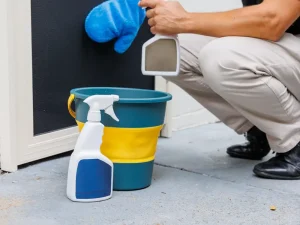
Some of these include plastisol, water-based, and solvent-based inks. Using the ink remover is very simple. You have to apply it to the screen, let it sit for a short time, then wipe or rinse it off. Additionally, there are different types of ink removers. Some are fast-acting sprays that clean small areas quickly during printing. However, some ink removers are stronger liquids or gels used to remove dried ink after a long print run.
6- Press Wash or On-Press Cleaner
Press wash is another special chemical used in silk screen printing. Actually, when you print designs on a screen, sometimes the ink can start to stick or build up on the screen while you are still printing. This can slow you down or make your design messy. To quickly solve this problem, a press wash or a press cleaner is used. It is a chemical that quickly cleans the screen while it is still on the printing machine.
You don’t have to take the screen off. You spray or apply it on the screen, wipe the ink, and continue printing. It is beneficial when you are printing multiple colors or doing lots of prints in a row. It keeps the screen clean and stops the ink from smudging or blocking the mesh. In short, press wash is a time-saving chemical in silk screen printing.
7- Pallet Adhesive (Spray or Liquid)
When screen printing on T-shirts or other garments, a common problem is that the fabric can shift during printing. Even a tiny movement can make your design blurry or misaligned. This is where pallet adhesive comes in handy. Pallet screen printing adhesive is a sticky chemical that you apply to the printing board (called a pallet). Once the fabric is placed on top, it sticks slightly, but not enough to prevent removal later.
This keeps the shirt in place while the squeegee pushes ink through the screen. As a result, the print made is highly clean and precise. Moreover, there are different types of pallet adhesives to suit various needs. For example, spray adhesives like Sprayidea 86, Sprayidea 83, and high-temp Sprayidea 91 are quick and easy to apply. However, adhesive manufacturers produce liquid adhesives or water-based formulas specifically for large projects.
8- Blockout or Screen Filler
Sometimes, after applying the emulsion and exposing it to light, small spots on the stencil may not get fully covered by the emulsion. These are tiny holes or open areas in the stencil through which ink can accidentally pass, causing smudges on your print. To tackle this problem, a blockout or screen filler is used in screen printing. Blockout is a thick, paste-like chemical. It is applied to the mesh to cover unwanted areas.
You can use it with a brush or spatula to carefully fill in pinholes or sections where ink should not pass. Once dried, the blockout seals these spots, making the screen ready for a clean, accurate print. This chemical is beneficial when you are working with high-density inks. These thick inks can more easily go through tiny, unwanted gaps in the stencil. However, blockout blocks these gaps, keeping the print clean and sharp.
9- Ink Additives
In screen printing, sometimes the ink needs a little help to work better. That’s where the ink additives become very essential. As the name suggests, these are special chemicals added to your ink to change how it flows, dries, or sticks. They make it easier to print the ink, especially for tricky designs. Simply put, the ink additives give you control over the print quality. Generally, there are three main types of ink additives. These include:
- Thickeners: These additives make the ink thicker. Thick ink is useful for bold, heavy prints or when printing on uneven surfaces. The thickeners also prevent the ink from spreading and make the print smudge-free.
- Reducer: This additive thins the ink. Thin ink flows more easily and is excellent for detailed designs or when printing multiple colors. It helps the ink pass smoothly through the screen.
- Retarder: This type of additive slows down the drying time of the ink. Usually, some inks dry very quickly on the screen. This makes it hard to print large designs or prints with many colors. Adding a retarder keeps the ink wet longer. As a result, you have more time to pull the ink through the screen and finish the print correctly.
10- Catalyst or Crosslinker
A catalyst, also called a crosslinker, is a chemical added to ink to make the print stronger and more durable. When printing on tricky fabrics, like polyester or blends, the ink alone is not enough to stick perfectly. Thus, to ensure a strong print, catalysts are added to inks to strengthen the bond between the ink and the fabric. A catalyst works at a molecular level to form stronger connections in the ink.
It means that even after curing, the ink remains tightly bound to the fibers, resulting in a strong print. Catalysts are usually added in small, precise amounts to the ink. Too small or too much additive can cause uneven prints, so the amount balance is crucial. Moreover, some catalysts also improve chemical and heat resistance. This quality is particularly useful when the printed items will be used outdoors.
Safety & Handling Tips for All Screen Printing Chemicals
Screen printing chemicals are essential for achieving high-quality prints. However, many of these chemicals are highly corrosive and dangerous. Therefore, protecting yourself, the workplace, and the print is crucial when using these chemicals. Below, I will discuss safety tips you should be aware of when handling screen-printing chemicals.
- Wear Protective Gear: First, wear gloves, safety glasses, and an apron. Gloves protect your skin from irritation, rashes, or burns caused by strong chemicals. Goggles prevent splashes of chemicals.
- Work in a Ventilated Area: Many screen printing chemicals produce strong fumes. These fumes, if inhaled, can cause severe lung issues and eye irritation. To prevent this, always work in a well-ventilated space, open windows if possible, or use a fan or exhaust system.
- Read Labels Carefully: Every chemical comes with instructions and safety warnings on the label. These instructions tell you how much to use, how to use it, and the safety precautions. So you must follow these instructions for safety and better results.
- Store Chemicals Properly: Proper storage of the chemicals is another thing you must know. You should always store chemicals in sealed, labeled containers and keep them in a cool, dry place. However, never place the chemical bottles with drinking bottles or food.
- Use Chemicals Only as Intended: Screen chemicals are highly specific in nature. So, you should never mix any two chemicals unless the instructions say they’re safe to do so. The reason is that mixing two wrong chemicals can cause an aggressive reaction and might burn you.
Conclusion
Screen printing has become the most popular method for efficiently printing on a wide range of products. At first, this process seems very simple. However, behind every sharp and clean print you get, there are several screen printing chemicals working together. In this article, I have enlisted some of the most common chemicals used in screen printing, each with a specific job.
For example, some chemicals are used to clean mesh while others can remove ink. Similarly, some screen-printing chemicals are used as adhesives to make the print durable. Additionally, chemical additives improve ink efficiency. In short, without these chemicals, you cannot get proper prints. However, while handling these chemicals, you should not ignore safety measures.